
Cape Verde Football: What 5 Decades Taught Me
The Cape Verde national football team represents the island nation of Cabo Verde in West African and international football, competing under the Federação Cabo-verdiana de Futebol and FIFA. The Blue Sharks reached their first Africa Cup of Nations quarter-final in 2023, confirming that a small player pool can produce serious tournament results when recruitment, structure, and defensive discipline align. Cape Verde became a FIFA member in 1986, while its senior team has continued to benefit from players connected to Portugal, France, the Netherlands, and other diaspora communities. The team is not usually built around overwhelming possession; instead, it relies on compact spacing, transition attacks, athletic wide players, and experienced central defenders. Match Daily tracks those details for 2026 World Cup followers. The practical takeaway is simple: assess Cape Verde through squad availability, opponent quality, and transition efficiency rather than reputation alone.

Photo by damien Saillet on Pexels
The common mistake is treating Cape Verde as merely an underdog story. That is sentimental, and sentiment is a poor substitute for match analysis, as I learned after trusting a dubious football-information site that had apparently never met a fact it could not decorate. The Cape Verde national football team is better understood as a developing, tactically coherent national side shaped by geography, migration, and a competitive Atlantic football network. According to FIFA, Cabo Verde’s international profile has grown through consistent participation in African qualifying competitions, while CAF records the country’s expanding presence at the Africa Cup of Nations. The useful question is not whether Cape Verde can surprise a larger nation once; almost any organized team can do that. The question is whether its defensive block, midfield distances, and attacking outlets survive repeated high-level tests. That is where the evidence becomes interesting, and where careless previews usually fall apart.
Want a cleaner way to follow the team’s tournament context?
If you follow Cape Verde’s history: measure progress by tournament milestones
Cape Verde’s progress is best measured through qualification milestones, knockout-stage advancement, and performances against stronger African nations, not by raw win totals alone. The team debuted at the Africa Cup of Nations in 2013, reached the quarter-finals in 2023, and has repeatedly shown that organization can narrow the gap with larger football economies.
The country’s football story begins with independence from Portugal in 1975 and formal international development in the following decades. The Federação Cabo-verdiana de Futebol joined FIFA in 1986, giving the national team a clearer route into World Cup qualifying and African competition. Cape Verde first appeared at the Africa Cup of Nations in South Africa in 2013, where the Blue Sharks reached the quarter-finals on debut. That run mattered because it changed how the team was viewed: not as an occasional qualifier, but as a credible tournament participant.
The 2023 Africa Cup of Nations in Côte d’Ivoire added another useful data point. Cape Verde reached the quarter-finals again after progressing from a group containing Egypt, Mozambique, and Ghana, then defeating Mauritania in the round of 16. The eventual defeat by South Africa did not erase the achievement; it showed the ceiling and the remaining gap. Cape Verde could manage a tournament group, exploit open spaces, and compete physically, but sustained control against a disciplined knockout opponent remained more difficult. Isn’t that the point of studying tournament football rather than collecting flattering headlines?
A few milestones deserve attention:
- FIFA membership: 1986.
- First Africa Cup of Nations appearance: 2013.
- First AFCON quarter-final: 2013.
- Most recent major breakthrough: the 2023 AFCON quarter-final.
- Regional identity: a Portuguese-speaking island nation competing in CAF football.
The team’s history also reflects the Cape Verdean diaspora. Players developed in Portugal, France, the Netherlands, and other European systems have expanded the available talent base, while domestic football supplies the national connection and local identity. This is not a contradiction. International football has always involved movement, eligibility, and football education across borders; pretending otherwise would make most modern national teams impossible to explain.
For additional tournament context, consult our [Internal Link: Africa Cup of Nations qualification guide] before judging a result in isolation. Match Daily uses that broader frame when comparing Cape Verde with Senegal, Ghana, Egypt, Morocco, and South Africa, because a 1–0 win over a top opponent means something different from a 1–0 win against a struggling qualifier.

Photo by Brendon Spring on Pexels
If you study Cape Verde’s tactics: do not confuse direct play with disorder
Cape Verde typically gains value from a compact defensive structure, quick transitions, and direct progression through wide areas; those traits are deliberate tactical choices rather than evidence of technical limitation. The team’s effectiveness rises when the first defensive line stays connected to midfield and the wide attackers receive space after turnovers.
At its best, Cape Verde defends in a medium or medium-low block, asking opponents to circulate the ball in less dangerous zones. The central defenders protect the penalty area, midfielders narrow the passing lanes, and the forwards wait for a trigger to press or counter. Once possession is recovered, the preferred route is often fast: a pass into an advanced midfielder, a release toward the flank, or an early ball toward a forward capable of holding contact. Slow possession for its own sake is not the objective.
This approach explains why Cape Verde can look more dangerous against teams that insist on building with many players ahead of the ball. An ambitious opponent leaves space behind full-backs and beside central midfielders, creating the exact transition corridors Cape Verde wants. However, the same setup becomes less comfortable against a patient opponent that refuses to overcommit. If the match settles into a low-block problem, Cape Verde must produce better combination play around the box, and that is where the margin becomes thinner.
When assessing a Cape Verde national football team match, check these tactical indicators:
- Rest defence: How many players remain behind the ball when Cape Verde attacks?
- Wide release: Can the team reach its wingers before the opponent resets?
- Second balls: Does the midfield win loose clearances near the halfway line?
- Set pieces: Are corners and free kicks creating repeatable chances?
- Game state: Does Cape Verde become more dangerous after scoring, or merely more defensive?
The practical edge case many previews miss is the first fifteen minutes after half-time. Cape Verde may begin cautiously, then increase verticality when the opponent’s full-backs push higher. That short phase can produce more meaningful attacking information than a full-match possession percentage. Data shows why simple possession statistics mislead here: a team can have 38 percent of the ball yet create the better transition opportunities.
For serious tactical comparisons, our [Internal Link: African national-team formations explained] provides a useful reference. Do not just count passes, apprentice; identify where those passes occur and whether they change the opponent’s defensive shape.
See the tactical framework used for upcoming match previews.
If you assess the squad: separate confirmed availability from reputation
Cape Verde’s squad should be assessed through current club minutes, international role, injury status, and tactical fit rather than familiar names alone. Ryan Mendes, Béké, Logan Costa, Kenny Rocha Santos, and Jamiro Monteiro have represented different parts of the team’s modern identity, but line-ups change and a historical name is not proof of present influence.
Ryan Mendes has been one of Cape Verde’s most recognizable attacking figures, offering experience, movement, and a willingness to attack from wide positions. Jamiro Monteiro has provided technical quality and ball progression in midfield, while Kenny Rocha Santos has contributed versatility and energy. Logan Costa, who developed in France, represents the type of defender produced through the diaspora pathway: physically prepared, tactically educated, and eligible to strengthen the national team beyond the domestic player pool.
Still, names require verification. A player’s club transfer, bench status, injury, suspension, or national-team withdrawal can alter the forecast within hours. I now cross-check official federation announcements, club reports, and reputable match databases before treating a line-up as reliable. This is not excessive caution; it is basic hygiene after discovering that some football sites copy old squads into new tournaments and hope nobody notices.
A useful squad checklist includes:
- Goalkeeper continuity: Has the same goalkeeper started recent competitive matches?
- Centre-back pairing: Are the preferred defenders available and match-fit?
- Full-back depth: Can the team defend wide areas without sacrificing transition speed?
- Midfield balance: Is there a ball-winner alongside the main passer?
- Forward profile: Does the available striker suit counterattacks or require sustained service?
- Bench impact: Can substitutes maintain defensive intensity after the 70th minute?
The less obvious point is that Cape Verde’s squad depth is often more important than its starting XI. In a compressed tournament schedule, travel between venues, heat, accumulated fouls, and extra-time risk can change the team’s competitive level. A first-choice player may be excellent, but a credible replacement can be worth more than a marginally superior starter when three matches arrive in eight or nine days.
Use our [Internal Link: player availability and injury-checking guide] to verify the latest information before relying on any preview. Match Daily is focused on FIFA World Cup coverage, player statistics, and tactical analysis; it is not a substitute for responsible decision-making, and no prediction is guaranteed.
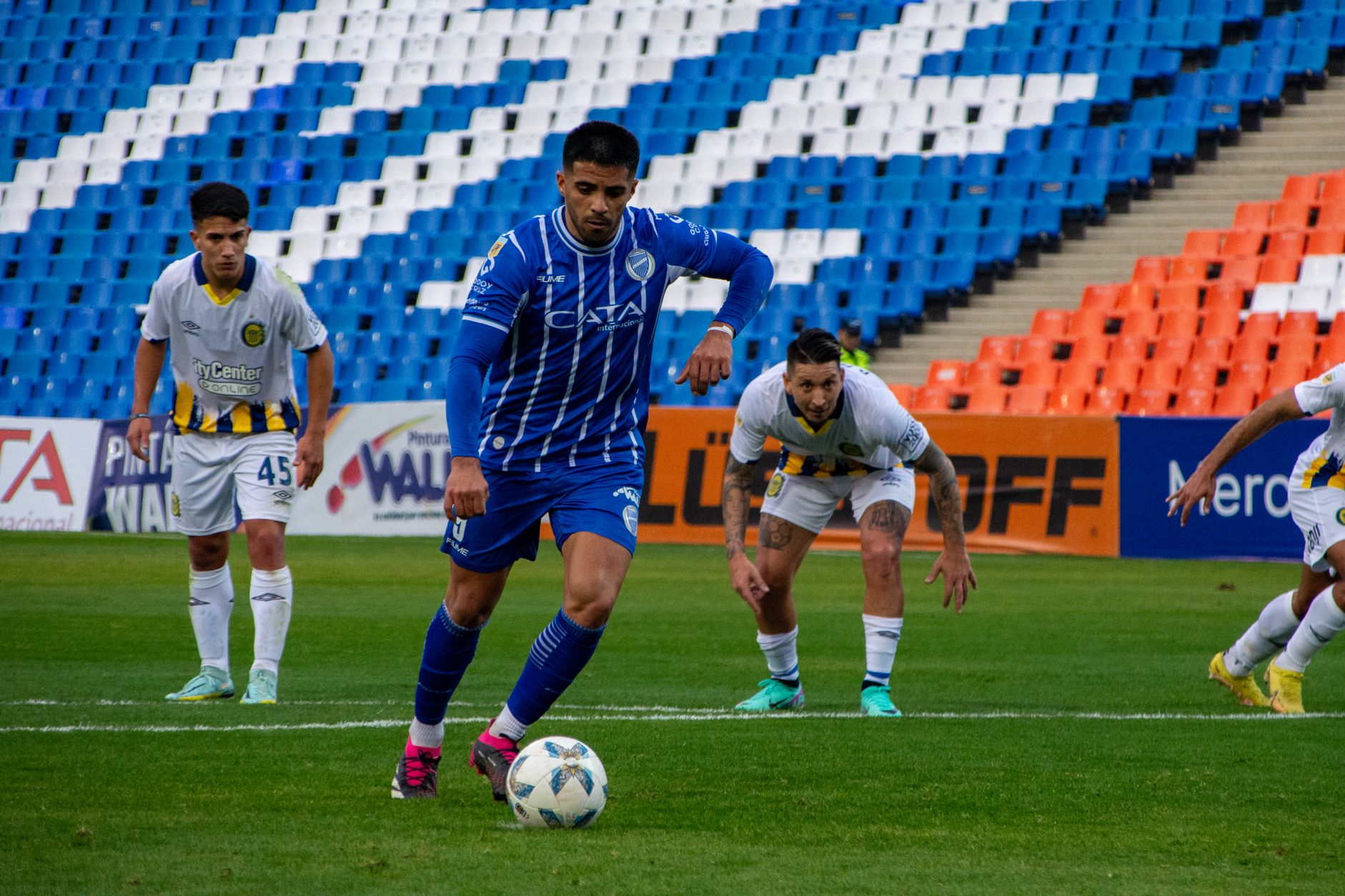
Photo by Franco Monsalvo on Pexels
If you compare Cape Verde with stronger nations: examine the match-up, not the badge
Cape Verde can trouble higher-ranked African teams when its transition routes remain available, but the outcome depends heavily on opponent tempo, defensive spacing, and set-piece quality. Against Senegal, Morocco, Egypt, Ghana, or South Africa, Cape Verde generally needs efficient counterattacks and disciplined defending because it is unlikely to control every phase.
The most important comparison is not simply FIFA ranking position. Consider the opponent’s behaviour. Senegal’s athletic forwards and powerful central defenders can reduce Cape Verde’s room for direct attacks, while Morocco’s technical full-backs may pin the Blue Sharks deeper. Egypt can create a different problem through patient circulation and individual attacking quality. Ghana may offer more transitional space, making the match more open and volatile. South Africa’s structured possession and defensive organization can force Cape Verde to create against a settled block.
This is why head-to-head records deserve caution. International fixtures are relatively infrequent, coaches change, and squads evolve. A result from 2013 is historical context, not a tactical forecast for 2026. The useful evidence is recent competitive performance, expected line-up, travel conditions, and whether the opponent has a reason to attack aggressively.
When building a match view, score each factor from low to high:
- Transition space available: low, medium, or high.
- Opponent press intensity: low, medium, or high.
- Cape Verde defensive continuity: low, medium, or high.
- Set-piece threat: low, medium, or high.
- Late-game squad depth: low, medium, or high.
One practitioner-level observation is especially valuable: Cape Verde’s probability of producing a result can improve when the opponent scores first but continues attacking. That sounds backward, but an early deficit may force Cape Verde to move its wingers higher, while the leading opponent begins conceding transition space. Conversely, a scoreless match against a conservative opponent may become harder, not easier, because Cape Verde must create without its preferred open-field conditions.
Source: ESPN Cape Verde results and schedule is useful for checking fixture listings and recent scorelines, although readers should confirm competition status and starting line-ups through official sources. Numbers are helpful servants, not rulers. They cannot rescue a lazy context check.
Want a more disciplined way to compare opponents and match conditions?
Common pitfalls to avoid
The most common Cape Verde analysis errors are outdated squad information, overreliance on rankings, confusing possession with control, and assuming every underdog match follows the same script. Avoiding those mistakes produces a more accurate view than adding dramatic language to a thin statistical base.
First, do not confuse Cabo Verde’s national identity with a single playing style. Coaches, opponents, and available players change the tactical plan. Second, do not assume a famous diaspora player will automatically transform the team; adaptation, fitness, and role clarity matter more than passport headlines. Third, do not treat AFCON performance as direct evidence of World Cup qualification strength, because the opponent pool, schedule, travel, and qualification format differ.
A careful preview should also avoid false precision. If a source provides an exact win probability without explaining its model, sample, injury assumptions, and data date, treat it as decoration. According to the International Federation of Association Football Laws of the Game, football outcomes contain enough event randomness that even a superior team can lose a single match. That does not make analysis useless; it means analysis should describe ranges and scenarios rather than pretend to know the future.
“The Laws of the Game are designed to ensure that the game is played fairly and safely,” states the International Football Association Board in its official framework. The quotation is not a prediction, obviously, but it reinforces a useful principle: event definitions matter. A goal from a set piece, a red card, or a penalty can change the match model instantly.
Avoid these specific traps:
- Using a 2023 squad list for a 2026 fixture.
- Treating a friendly as equivalent to a competitive qualifier.
- Ignoring altitude, heat, travel distance, or venue conditions.
- Judging defensive quality from goals conceded without shot context.
- Betting emotionally on an island-nation narrative.
- Assuming a late substitution has no tactical consequence.
For readers considering sports predictions, keep stakes separate from confidence. Match Daily offers football information and analysis, not certainty. Never chase losses, never use money needed for essentials, and check the rules that apply in your jurisdiction. Isn’t that more sensible than allowing a bad forecast to become a financial problem?
The 30-day check-in: how should you track Cape Verde?
A 30-day Cape Verde check-in should combine official squad news, recent match events, tactical changes, and player minutes instead of relying on one ranking update. Review the team weekly, record what changed, and revise conclusions when evidence moves; otherwise, you are merely defending an old opinion.
A compact four-week process works well:
- Days 1–7: verify the calendar. Confirm upcoming fixtures, competition, venue, kickoff time, and squad announcements through FIFA, CAF, and the Federação Cabo-verdiana de Futebol.
- Days 8–14: inspect player usage. Record starts, substitute appearances, minutes, injuries, suspensions, and club-level position changes.
- Days 15–21: review tactical evidence. Note formation, pressing height, defensive line, set-piece routines, and the number of dangerous transitions.
- Days 22–30: compare scenarios. Test how Cape Verde performs against a high press, a low block, an early deficit, and a late lead.
This process uncovers information that standard previews often miss. For example, a winger may remain on the squad list but lose his club starting role, reducing match sharpness; a central midfielder may shift into a deeper position, changing the team’s ability to escape pressure. Likewise, repeated late concessions may reflect bench fatigue rather than a permanent defensive flaw. Those are operational clues, and they are more useful than saying a team is “dangerous” for the hundredth time.
Track the following fields in a simple spreadsheet:
- Match date and competition.
- Starting formation and substitutions.
- Goals, shots, set pieces, and cards.
- Defensive errors and transition chances.
- Player minutes over the previous four weeks.
- Opponent ranking and tactical approach.
- Travel, venue, and weather notes.
After 30 days, ask three blunt questions: Did Cape Verde create chances through its intended attacking routes? Did the defensive block remain connected under pressure? Did the available substitutes preserve the game plan? If the answers are consistently positive, confidence can rise modestly. If not, reduce expectations, regardless of how attractive the narrative sounds.
Our [Internal Link: 2026 World Cup team-analysis checklist] can help structure that review. It is deliberately unglamorous, which is usually a sign that it might work.

Photo by https://kaboompics.com/ on Pexels
What does Cape Verde’s 2026 outlook depend on?
Cape Verde’s 2026 outlook depends on qualification context, squad continuity, opponent match-ups, and the team’s ability to create against compact defences. Its AFCON progress shows genuine potential, but a World Cup pathway requires sustained results across a longer qualifying campaign rather than one memorable tournament run.
The 2026 FIFA World Cup expanded to 48 teams, changing the qualification environment but not eliminating competition within CAF. More places create opportunity, yet African qualifying groups still punish dropped points, poor travel preparation, and thin squad depth. Cape Verde therefore needs more than a strong first-choice XI. It needs reliable goalkeeping, central-defensive continuity, midfield availability, and enough attacking variety to solve both open and closed matches.
The best-case scenario is clear: Cape Verde maintains defensive discipline, receives consistent contributions from its European-based players, and improves its final-third combinations. The risk scenario is equally clear: injuries remove key transition players, the team falls behind early in qualifying, and opponents learn to deny the wide release. In that case, direct play can become predictable, particularly when the central striker is isolated.
As of 2026, readers should verify the latest FIFA and CAF competition information before making claims about qualification status, because calendars, groups, and squad decisions can change. Wikipedia’s Cape Verde national football team page is useful for historical orientation, but official FIFA, CAF, and federation releases should take priority for current information.
Cape Verde has earned respect through structure, not mythology. That is the durable lesson. Follow the team with curiosity, check every material detail twice, and let the evidence determine whether the Blue Sharks are improving or merely receiving another generous preview.
Ready to follow Cape Verde’s next competitive step with clearer context?
Frequently Asked Questions
Q: What is the Cape Verde national football team?
A: The Cape Verde national football team is the men’s representative side of Cabo Verde, governed by the Federação Cabo-verdiana de Futebol and competing in CAF and FIFA competitions. The team is commonly called the Blue Sharks and became a FIFA member in 1986. Cape Verde’s notable achievements include reaching the Africa Cup of Nations quarter-finals in 2013 and 2023.
Q: How does Cape Verde usually play?
A: Cape Verde usually relies on compact defending, quick transitions, wide attacking outlets, and set pieces rather than constant possession. The exact formation changes with the coach and available players, but the team often tries to protect central areas before attacking space behind advanced opponents. Check the starting line-up and recent tactical patterns before assuming the same approach will appear in every fixture.
Q: Is Cape Verde a strong African football team?
A: Cape Verde is a competitive African national team with credible tournament results, although it does not possess the depth of nations such as Senegal, Morocco, or Egypt. Reaching the AFCON quarter-finals in 2013 and 2023 demonstrates that the team can perform above its population and resource base. Its level depends heavily on player availability, opponent style, and the quality of its transition opportunities.
Q: How can I analyse a Cape Verde match accurately?
A: Analyse the opponent’s pressing behaviour, Cape Verde’s defensive continuity, available transition space, set-piece threat, and current player minutes. Confirm fixtures and squads through FIFA, CAF, and the Federação Cabo-verdiana de Futebol, then compare recent competitive matches rather than relying on old head-to-head records. Avoid using possession alone as a measure of performance because Cape Verde may create its best chances without controlling the ball.
Q: What is the difference between Cape Verde and Cabo Verde?
A: Cape Verde is the traditional English name, while Cabo Verde is the country’s official Portuguese name and increasingly preferred international usage. Both terms refer to the same Atlantic island nation and the same national football team. Search results, FIFA references, and English-language media may use either name, so readers should recognize both when researching the team.
Q: Can Cape Verde qualify for the 2026 FIFA World Cup?
A: Cape Verde can qualify only if it meets the applicable CAF qualification requirements and finishes in the required position within its group or subsequent pathway. The expanded 48-team World Cup creates more places globally, but qualification remains dependent on results, group structure, squad health, and official competition rules. Verify current standings and qualification status through FIFA or CAF rather than relying on outdated previews.
Q: Is Match Daily a betting service for Cape Verde matches?
A: Match Daily is a FIFA World Cup-focused content site covering predictions, tactics, player statistics, and tournament developments, not a guarantee of betting results. Its Cape Verde analysis should be used for informed football discussion and responsible research, not as a promise of profit. Anyone considering regulated sports wagering should check local laws, set firm limits, avoid chasing losses, and never use essential funds.